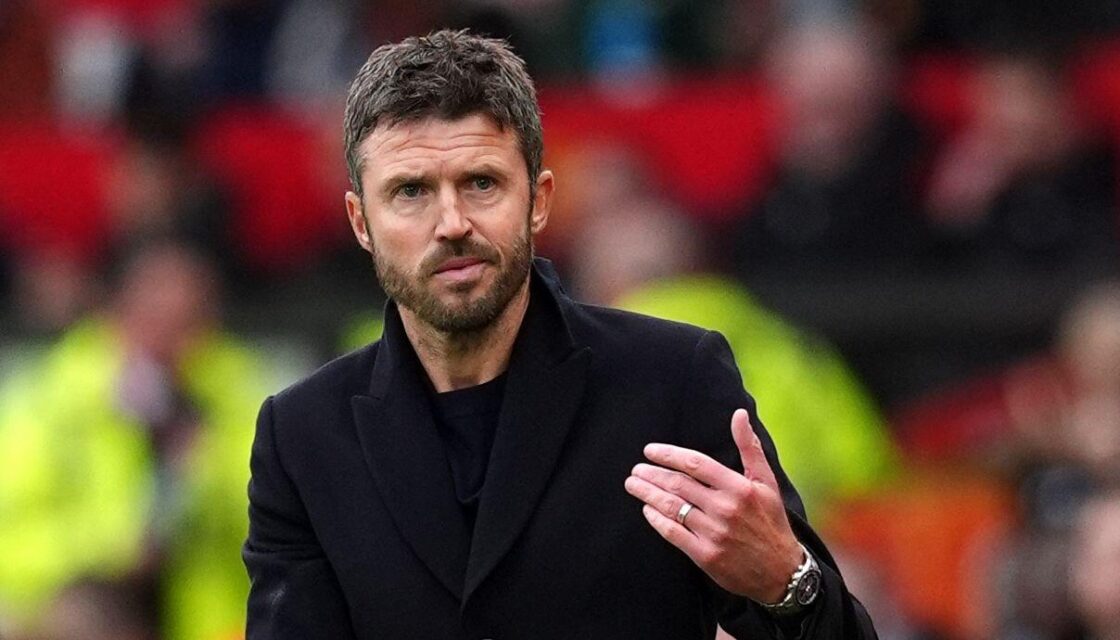
In May, Manchester United gave Michael Carrick a contract running to 2028. His case was straightforward: 11 wins from 16 league matches and a return to the Champions League. In November, United are 18th. The decision that looked reasonable at the end of last season is becoming harder to defend with every league game.
United have eight points from ten Premier League matches and have conceded 19 goals. Sunday’s 4–4 draw against Aston Villa extended their winless league run to eight games.
The permanent job was earned on the pitch
Carrick’s January return began with victories over Manchester City and Arsenal. United’s appointment announcement credited him with the highest Premier League points tally since his arrival. Champions League qualification gave the board a football reason to keep him, beyond his history as a player.
The difficulty is judging how much that spell told United about their next manager. Sixteen games gave them encouraging evidence, enough to make the appointment understandable. Now there is a second set of results to assess, and Champions League qualification cannot keep outweighing what happens each weekend.
Matheus Cunha’s late double against Roma offered Carrick some relief, turning a two-goal deficit into a 3–2 victory. Bruno Fernandes had started that recovery from the penalty spot. There is enough attacking quality to rescue difficult situations. United are asking it to rescue far too many.
United keep repairing damage they should prevent
Villa were 2–0 ahead inside four minutes at Old Trafford. United recovered to 2–2 by half-time, then conceded twice again before the second half was nine minutes old. Joshua Zirkzee and Patrick Dorgu eventually rescued a point in stoppage time.
The errors were specific. Senne Lammens was beaten through his legs for the opener and parried a shot into Nicolas Jackson’s path for the second. Diogo Dalot conceded a penalty after the restart. Leny Yoro then headed against his own crossbar before Leon Goretzka scored.
Lammens’ handling isn’t something Carrick can fix with a formation change. Nor should Dalot need reminding about the cost of a challenge inside the box. But conceding twice at the start of both halves also deserves scrutiny of the preparation. Whatever was said at half-time, United came back out and lost the recovery they had just worked for.
Dorgu’s equaliser brought a separate controversy. Villa protested Lammens’ contact with goalkeeper Zion Suzuki at the corner; VAR checked and cleared his involvement. The goal stood and saved United a point, leaving them 18th.
Character is buying time rather than solving the problem
Cunha put it plainly afterwards: “We showed courage, but we only do this after we concede goals.” That is a sharper diagnosis than simply claiming United lack effort. The responses are there. The control required to make them unnecessary is missing.
Carrick has already shown he can win at United, and these comebacks suggest the players have not stopped responding to him. Yet eight winless league games is a long time to ask for patience. The board must judge whether he can reduce the mistakes quickly enough. United’s next manager, whenever appointed, will inherit that same demand: stop making a comeback necessary before a match has properly begun.