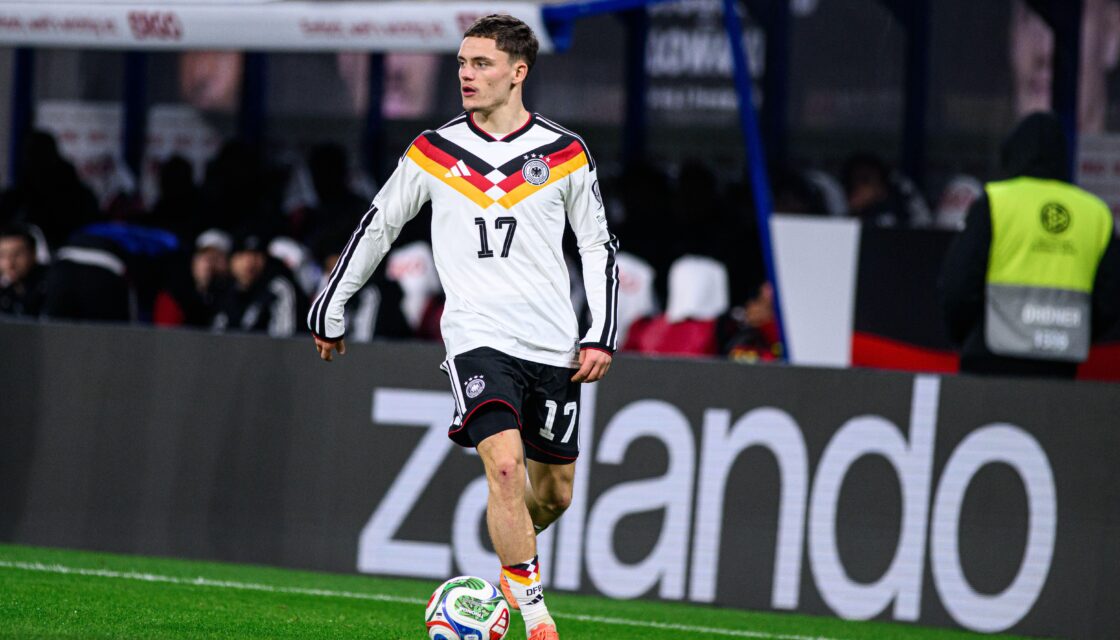
Florian Wirtz scored twice in Germany’s 5–0 victory over the Netherlands in Berlin on Monday to clinch Group A2 top spot in the Nations League. Although the Dutch also reached the quarter-finals ahead of Greece on the three-way tie-break, conceding four goals in the second half gave them little to celebrate.
When Wirtz scored in the 60th minute to make it 2–0, the Netherlands were still in the game, but three additional goals followed as their defence fell apart. Germany’s players won their individual battles for the ball, and the Dutch were unable to cover for teammates who had been beaten. There was space for Germany to use before the defence could get back together.
The first half had offered little warning
Derry Scherhant broke the deadlock for Germany in the 41st minute. He had cut inside from the left after a pass by Joshua Kimmich and shot. Denzel Dumfries had not managed to stop him coming inside, and although Bart Verbruggen got his hand to the shot, he could not keep it out.
Crysencio Summerville had missed an early chance when he slipped before shooting, and Donyell Malen had also failed to make proper contact with a cross from Cody Gakpo. Scherhant had already hit the post at the other end. A one-goal deficit still left the Dutch with a chance of getting back into the match.
Dumfries headed over early in the second half and Marc-André ter Stegen saved a shot from Gakpo before Wirtz’s goal. Germany were looking to increase their lead, but their opponents were still creating chances with the score at 1–0.
Wirtz found a way past the first challenge
The Netherlands were able to block the first attempt by Wirtz, but he stayed with the attack, moved inside and scored from outside the penalty area. Germany were now up 2–0. Blocking the first shot had not been enough to get the Dutch out of danger.
The third German goal arrived five minutes later. A free kick was delivered into the Dutch box, and Nico Schlotterbeck’s header found the net. The Netherlands had been beaten from distance and were now conceding to a delivery into the box as well.
The German attack continued, and after a combination with Brajan Gruda, Wirtz scored the fourth in the 71st minute. Gruda then followed up another Scherhant effort against the woodwork to make it 5–0. There was still a German player ready for the next ball when the first effort had been stopped.
Dumfries identified the gaps himself
Jürgen Klopp noted after the match that both teams had wanted to press high, contest long balls and win second balls. In the second half Germany were calmer and more attacking, and were able to win possession in better positions, said Kimmich.
Dumfries pointed to too much space, many second balls lost and too little strength in challenges. In his account published by the Dutch federation, he also admitted there had been frustration between players. Germany kept building attacks before the Netherlands could reorganise themselves.
Frenkie de Jong had withdrawn with a minor injury, so Xavi Hernández had to bring Quinten Timber into the side that had beaten Greece 7–0 on Friday. Nonetheless, closing down shots and keeping track of runners is a task for whoever is playing in midfield.
How the three-way tie was settled
Greece beat Serbia 1–0 in their last match, leaving all three teams on 11 points. UEFA compares the results between the tied teams first. All three had five points against each other, so head-to-head goal difference decided it: Germany +4, the Netherlands +2 and Greece −6.
Germany go through as group winners and the Netherlands as runners-up. Xavi has until March to try to fix the distances and communication in his defence. The Dutch problems began with allowing Germany another attack before they could reorganise and get back into the game.